
Insights • December 2, 2025
The Three Technologies That are Reshaping the Power Industry
Over the past decade, the U.S. power landscape has been changing at an unprecedented pace. The artificial intelligence (AI) boom has accelerated energy demand to create new consumption patterns that are adding pressure on the grid. In response, utility providers and engineers are rethinking how they design and invest in power systems to keep them dependable. To meet rising electricity needs, they’re turning to new technologies to stabilize and strengthen the grid.
Read on to learn more about the technologies that are reshaping the future of power.
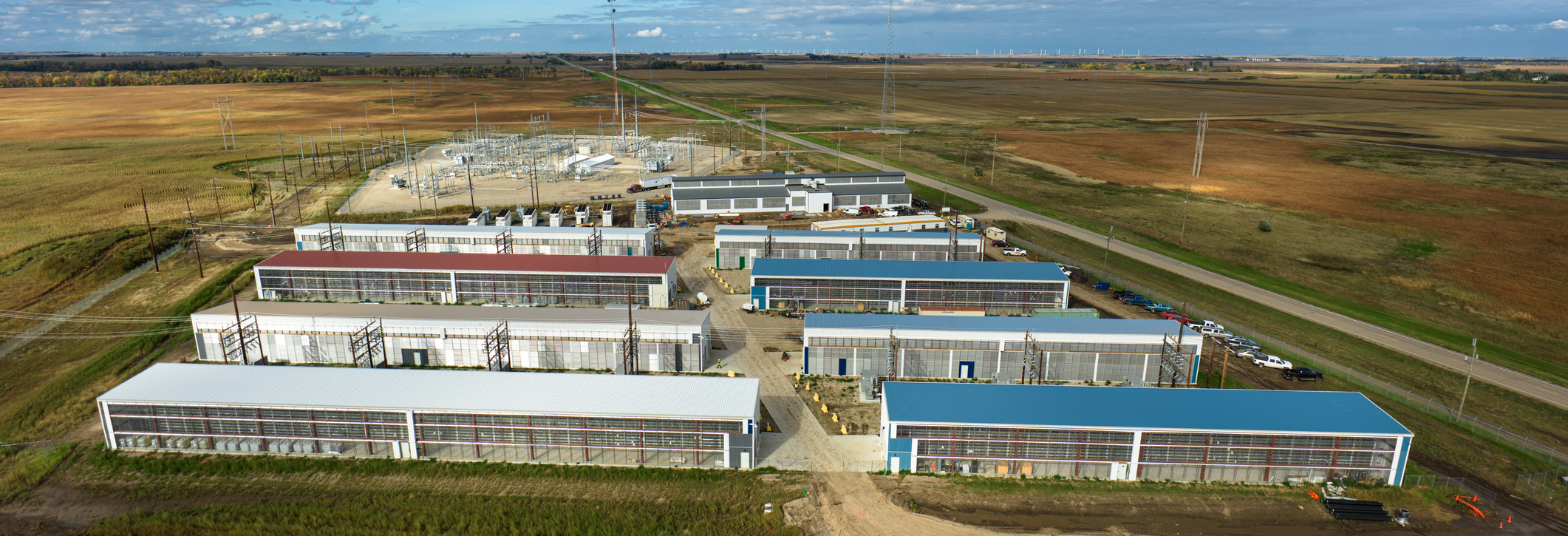
Data Centers, Small Modular Reactors, and Reciprocating Natural Gas Generators
Data centers are quickly becoming a determining factor in how the power landscape will shape up over the next decade. These facilities power and store the computer systems that power AI and are being built at a rapid pace in correlation with the recent rise in AI usage. Although they are a huge technological advancement, there is a potential caveat in that they require large amounts of electricity to run, and that demand is only expected to grow. By 2030, U.S. data centers could use more electricity than entire countries like Japan or Turkey. As consumption habits change, utility providers are rethinking what technology and infrastructure needs to be invested in to ensure that the grid remains stable. One promising approach combines ”small nuclear power plants, known as?small modular reactors?(SMRs), SMRs are designed to be more affordable and reliable, while RNGGs deliver fast power with no emissions and scalable supply chains. When paired together, these technologies provide a cleaner, cost-efficient energy solution capable of meeting the electrical needs of data centers. They can also be constructed quickly, becoming operational in as little as sixty months.
Engineers can implement this technology in phases. 225 MWe RNGGs come first, followed by two SMRs. Once the SMRs are running, the RNGGs shift into a supporting role, helping balance supply and demand, and providing backup power. Because both RNGGs and SMRs are designed to be compact and modular, they scale easily alongside new data centers. That flexibility lowers project risk, makes better use of capital, and results in a dependable, low-emissions power supply. This solution for powering data centers has captured the interest of major industry heavyweights like Amazon, Google, and Microsoft, all of whom have announced plans to invest in SMRs and RNGGs to support new data center initiatives.
Battery Energy Storage Systems
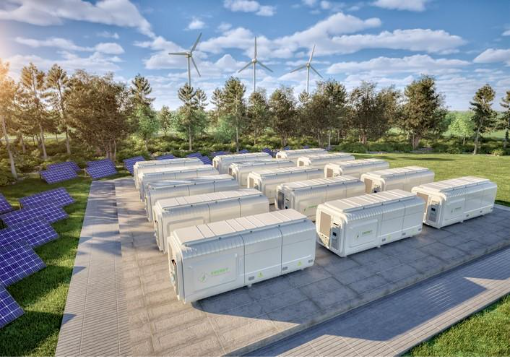
Another technology the is reshaping the power landscape is Battery Energy Storage Systems (BESS). These systems use batteries, advanced control software, and safety mechanisms to store excess electricity from renewable sources like solar and wind and deliver it to consumers within seconds when demand spikes. In doing so, BESS can change variable energy output into a dependable capacity and help balance supply and demand and cut peak costs. BESS adds much-needed flexibility since it can stabilize the grid by regulating frequency, supporting voltage, ramping power up or down, and even restarting parts of the grid after a blackout. It also allows for peak shaving and load shifting to reduce congestion and lower prices for consumers. All of these factors are making BESS a huge investment point for providers, a fact that is reflected in the market as BESS was the most invested in-energy technology in 2023.

“BESS is paving the way for the future of power technology, and it’s engineering that is going to make that future possible. Our teams are building systems to bring these energy storage solutions to life. We’re proud to be a thought leader in an industry that’s helping providers turn this technology into real, lasting impact for communities across the country.”
– Joe Zurad, Chief Quality Officer, Milhouse
Renewable Energy and BESS
BESS technology is also helping to integrate renewable energy into the power grid. The U.S. Energy Information Administration projects that solar generation alone will have grown by 75% between 2023 and the end of 2025. But, renewable energy sources can’t always produce power consistently, so storage systems like BESS are necessary to store that energy and deliver it on an ad-hoc basis.
Our country’s current power grid wasn’t designed to handle renewable energy at this scale, which means widespread infrastructure upgrades are needed. BESS are proving to be one of the most effective tools for making that transition possible since it is easily scalable and can be used commercially and residentially.
Examples of this include:
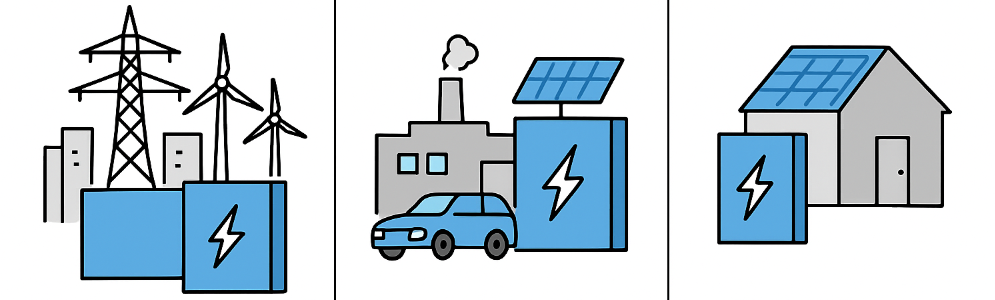
| Front-of-the-meter (FTM) BESS | Behind-the-meter (BTM) commercial and industrial BESS | BTM residential BESS |
|---|---|---|
| Large-scale installations (over 10 megawatt-hours) are used to directly support utility operations. | Medium-scale systems (30 kilowatt-hours to 10 megawatt-hours) that help businesses integrate renewables, maintain backup power, and support EV charging. | Smaller systems (under 30 kilowatt-hours) give homeowners flexibility in sourcing their energy and powering their homes. |
Engineering expertise will be needed to design the systems and infrastructure that implement renewable energy. Milhouse is already starting to support that transition. When a solar farm in the Midwest needed to connect to a major utility network, our team provided the full electrical and civil engineering design to make it possible. This included installing new poles, underground cabling, automation equipment, and metering systems in coordination with permitting, procurement, and utility requirements. Thanks to our designs, the solar farm was successfully integrated into the region’s distribution system. This project was part of a larger clean energy program sanctioned by Illinois lawmakers to bring clean energy to the state. Under this program, we’ve delivered multiple projects connecting renewable energy sources to utility grids and helped communities take tangible steps toward a more sustainable future.
As these trends continue to progress, technologies like data centers, BESS, and renewable energy will reshape how we produce power, use it, and ultimately, what the energy landscape will look like in the next decade. Milhouse is proud to be at the forefront of this transformation. By supporting utility providers as they start to adopt these technologies, we help ensure grid stability and guarantee that consumers have access to dependable energy sources. This work reflects our commitment to advancing the next wave of technology in the power sector and making a positive impact in the communities we serve.